
ArtQuartet News – Spring 2026
by Sally Parker
Spring 2026
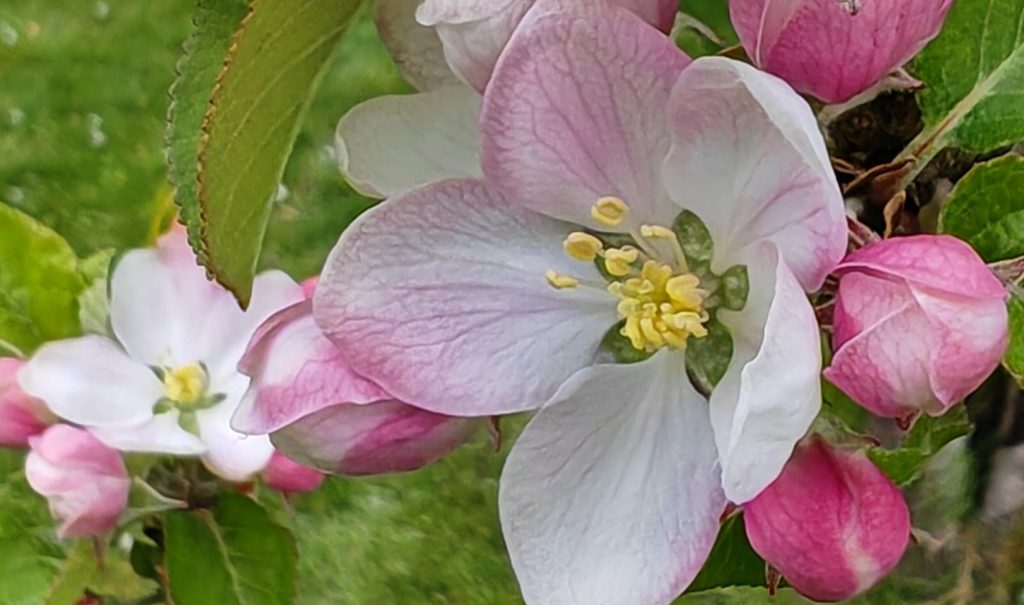
Gentle whispers of spring emerge, breathing luminous hope and waves of energy into the slumbering earth. Soft tendrils of verdant promise unfurl across dormant landscapes, painting the world in delicate, colourful brushstrokes of renewal.
- Earth Pathways Calendar 2026 – April
- HEALING GARDEN: Campanula
- Folklore and Fairytales – Campanula
- Healing Campanula – Folk Remedies & Honey
- Language of Flowers – Campanula
Earth Pathways’ Calendar 2026 – April
‘Mother Earth II’ features in the Earth Pathways Calendar this season in the month of April. A healing poem by Kamini Gupta, ‘The Wild Call of Summer, ’ complements the theme of my artwork beautifully. If you have purchased this year’s calendar, thank you for your support. You have helped to support Earth Pathways’ grassroots and community ventures, which are vital to healing our precious Earth.
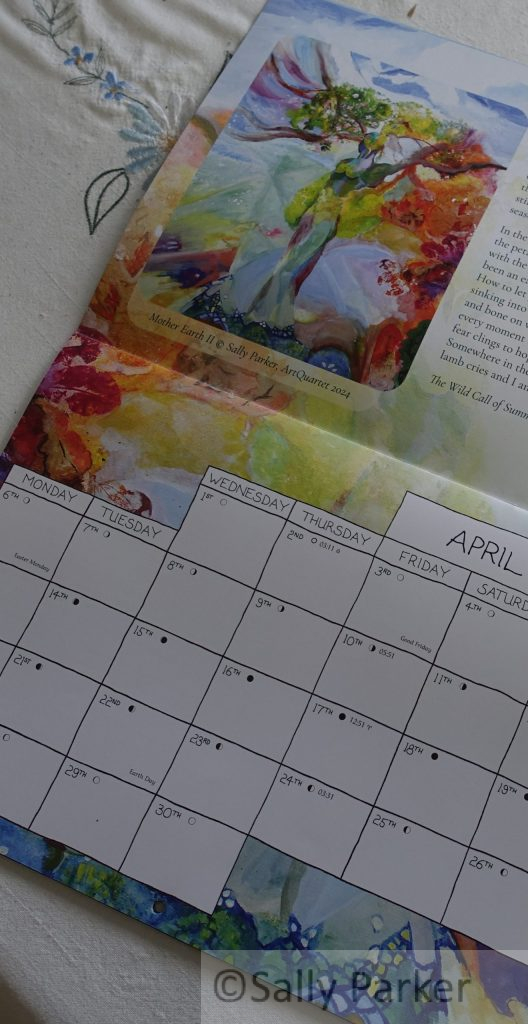
‘Mother Earth II’ ©Sally Parker
HEALING GARDEN: Campanula
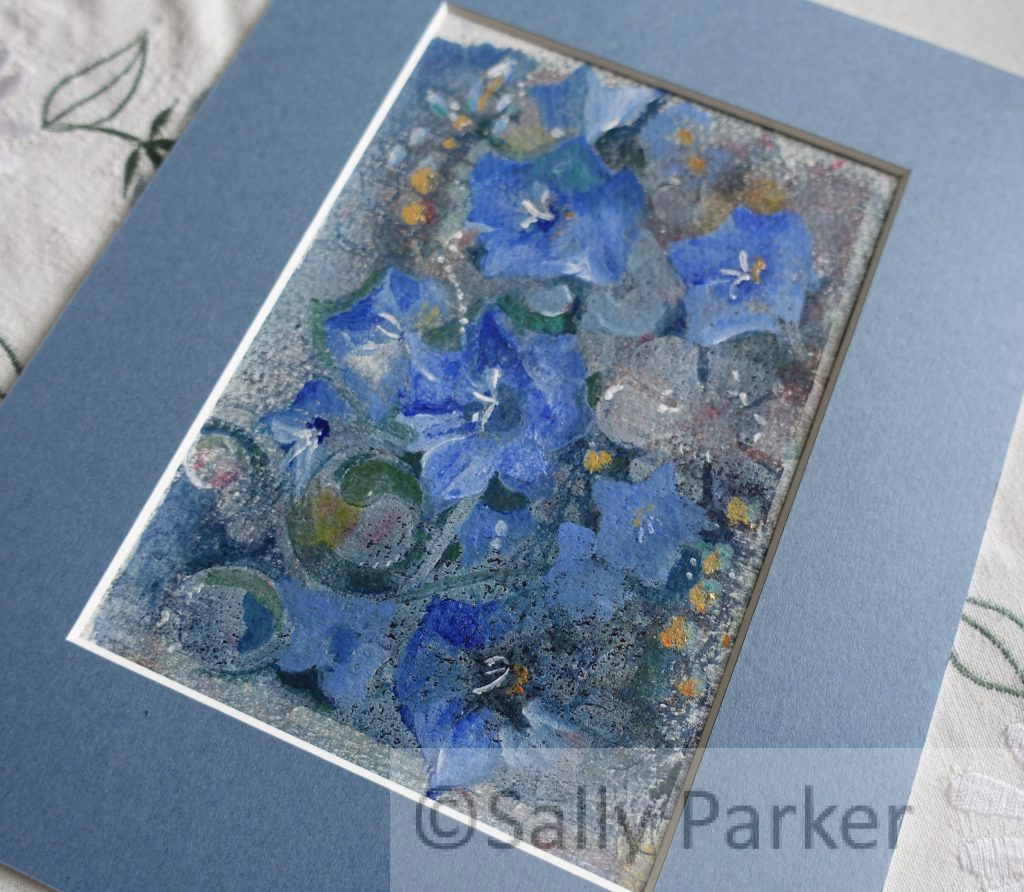
Campanula
Campanula (L): “Little bell“.
Other names for campanula include: Bell Flower, Canterbury Bells (Campanula Medium), Flora’s Bellflower, Rapuntia, Rapuntium, Harebell, Fairy Bell, Dead Men’s Bell.
“They tinkle while the fairies play,
The Harebell Fairy Poem, Cicely Mary Barker
With dance and song,
The whole night long,
Till daybreak wakens, cold and grey,
And elfin music fades away.”
Folklore and Fairytales – Campanula
Celtic Folklore
Bell-shaped flowers, such as bluebells, hollyhocks, and campanula, have long been regarded in Celtic folklore as living portals between the human and supernatural realms. Celtic whispers tell of bellflowers as living sanctuaries, their delicate petals serving as both shelter and home for the ethereal folk who dwell within. Within these thresholds where magic breathes, are places of transformation. Campanula flowers, with their distinctive bell – or trumpet-shaped blooms, in these twilight realms between shadow and light, become sacred musical instruments for the fairy kingdoms. Azure or white bells sound silent warnings and alert woodland creatures to any danger—these magical shields of protection span between the seen and the unseen worlds.
‘Rapunzel’
The fairy tale Rapunzel, published by the Brothers Grimm in 1812, is thought to be inspired by Campanula rapunculus. This plant is also known as Rapunzel, Rampion Bellflower, and Creeping Bellflower, as well as many others. Rapunculus (L.) means “little turnip”, which reflects its culinary traditions. The plant has edible leaves and a thick, fleshy root that were once used in salads and herbal medicine.
The fairytale ‘Rapunzel’ begins with a woman who is expecting her first child, who has an intense craving for Rapunzel leaves. Her husband decides to visit the neighbouring garden, which is abundant with all varieties of vegetables. He waited for it to grow dark and gathered the rapunzel leaves to ensure that his wife and unborn child would remain healthy. He was gathering the rapunculus leaves when he was startled by the neighbour who suddenly appeared from the shadows. The woman insisted that he make amends for trespassing and stealing her ‘magical plants’ from her garden. The sorceress demanded that the man promise to give his firstborn child to her care. The man thought that her demands were so ridiculous they would never come to pass, and agreed in haste, grateful to escape from the frightful woman.
However, the neighbour’s demands were met, and the sorceress took the child into her care, leaving the parents heartbroken. The child was named Rapunzel and was locked away in a tower in the woods. The tower had no doors, just one window at the very top. Mother Gothel, the sorceress, when she wished to visit Rapunzel, would call up and demand that Rapunzel let down her long, braided hair out of the window, which the witch would use as a rope to climb up (the braid was yet another reference to the character of Campanula Rapunculus).
Healing Campanula – Folk Remedies & Honey
Folk Remedies
Herbal medicines containing Campanula (Bellflower) were traditionally used for respiratory symptoms such as coughs, sore throats, and bronchitis, as well as for inflammation, digestive upset, and headaches, due to compounds such as saponins and flavonoids, which have anti-inflammatory, antibacterial, and antioxidant properties. Folk remedies used their roots, leaves, and flowers for wound healing, to calm the body, and as mild diuretics, though modern use requires careful identification due to potential confusion with toxic relatives, and scientific validation is ongoing.
Honey
Campanula is widely recognised as a valuable plant for supporting bee populations and contributing to honey production. Campanula flowers, such as the Canterbury bell (Campanula medium) and the native harebell (Campanula rotundifolia), are highly attractive to pollinators. Beekeepers sometimes plant large quantities of Canterbury bells specifically to produce a “potently sweet” honey.
Language of Flowers – Campanula
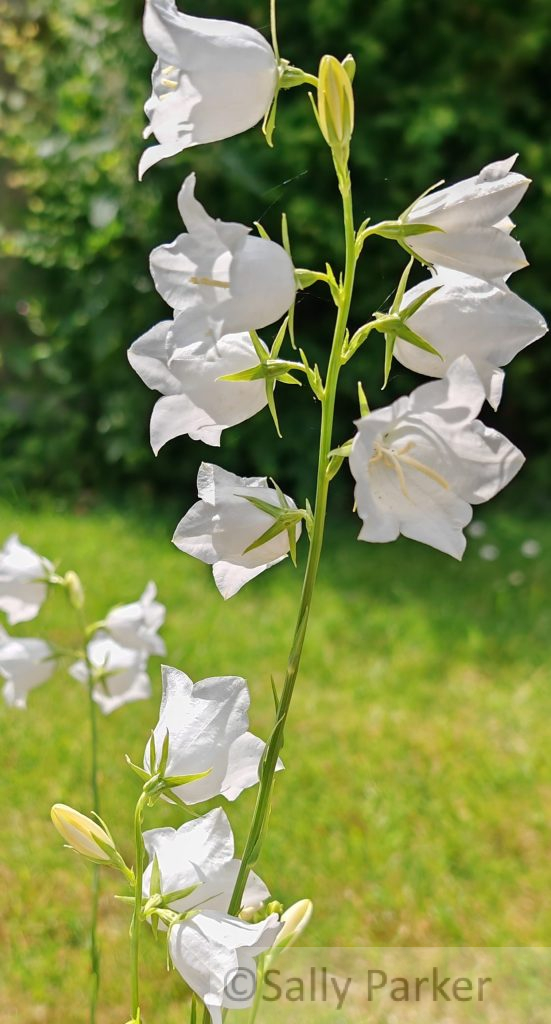
A Bouquet of Gratitude
The Language of Flowers reveals Campanulas as complex botanical symbols, intertwining meanings of unwavering loyalty and heartfelt obligation. These graceful, bell-like blooms can be a thoughtful choice in a carefully selected bouquet to express genuine gratitude.
A Warning from Gardeners
While campanula’s symbolism is on the whole positive, it carries a modern warning from gardeners as particular species such as campanula rapunculoides (rapunzel) spreads relentlessly via extensive, deep white taproots and rhizomes, as well as by producing thousands of tiny, easily-spread seeds. These resilient blooms also embody constancy in adversity, mirroring their remarkable ability to endure various weather conditions, their delicate petals a testament to their strength despite nature’s challenges.
Thank you for reading, and I wish you all a happy spring season 2026!
Best wishes
Sally
This blog is for educational purposes only.